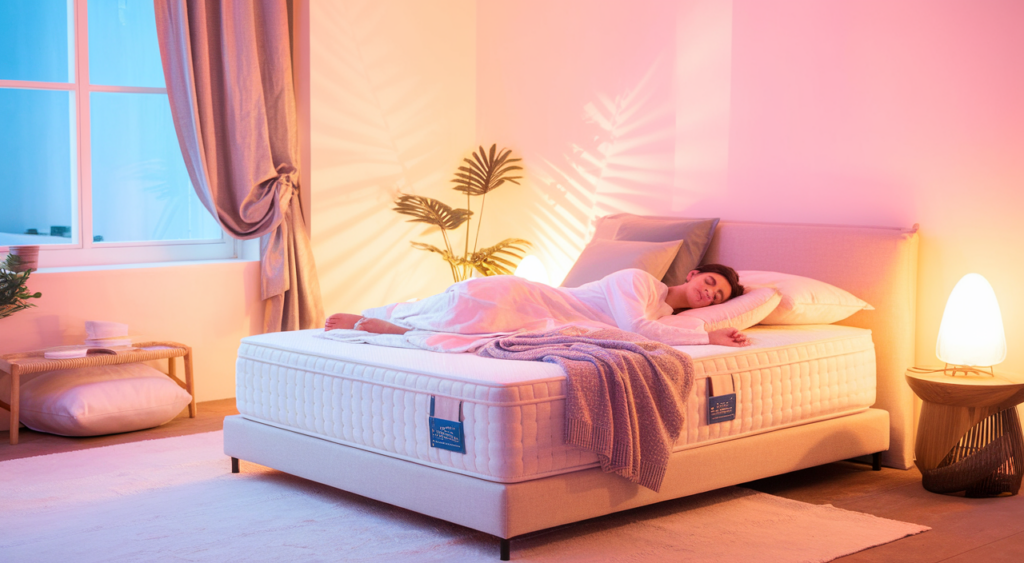
How to pick firmness for your sleep style? Selecting the correct mattress firmness delivers quality sleep, with sleep position and body weight serving as the main determining factors. Side sleepers need medium-soft to medium firmness for proper pressure relief, while back and stomach sleepers need firmer options to maintain proper spinal alignment.
Key Takeaways
- Side sleepers should look for mattresses with 2–4 inches of pressure-relieving comfort layers to cushion shoulders and hips while maintaining spinal support.
- Back sleepers benefit from medium-firm to firm mattresses (6–8 on the firmness scale) with enhanced lumbar support to prevent hip sinking.
- Stomach sleepers need the firmest support (7–9 on the scale) with minimal comfort layers to prevent midsection sagging that can strain the lower back.
- Body weight significantly affects firmness perception—lighter individuals should choose softer options than recommended for their sleep position, while heavier sleepers need firmer support to prevent excessive sinking.
I’ve found that matching mattress firmness to your specific needs creates the foundation for restful sleep. Your body type and sleeping habits directly impact which firmness level will support you best through the night. The wrong choice can lead to morning pain, restless nights, and accelerated mattress wear.
Recommendations by Sleep Position
Side Sleepers
For side sleepers, I recommend mattresses that allow shoulders and hips to sink slightly while supporting the waist. This prevents painful pressure points and maintains proper spinal alignment. Memory foam and hybrid options typically excel for side sleepers.
Back Sleepers
Back sleepers need firmer support that prevents the hips from sinking too deeply. The ideal mattress supports the natural curve of your spine while offering enough cushioning for comfort. Look for options with targeted lumbar reinforcement.
Stomach Sleepers
For stomach sleepers, I suggest the firmest options available. This position naturally flattens the spine’s curve, so minimal cushioning prevents the midsection from dipping and causing back strain.
How Weight Impacts Mattress Firmness
Your weight changes everything about mattress selection. Heavier individuals compress mattress materials more deeply, requiring firmer support than lightweight sleepers in the same position. I always suggest adjusting your firmness selection based on your body type – go firmer if you’re over 230 pounds and softer if you’re under 130 pounds.
Side Sleeper Solutions: Finding Your Comfort Zone
Side sleeping requires specific mattress considerations to maintain proper spinal alignment while cushioning pressure points. A medium-soft to medium firmness level typically provides the ideal balance of support and comfort for side sleepers. This range, scoring between 3-6 on the firmness scale, allows enough give to cradle the shoulders and hips while still maintaining essential spinal support.
Creating the Perfect Side Sleep Environment
The key to comfortable side sleeping lies in the mattress’s comfort layers. A mattress with 2-4 inches of pressure-relieving materials helps prevent shoulder and hip pain by distributing body weight evenly. Memory foam and hybrid mattresses excel in this area, particularly those with zoned support systems that provide targeted cushioning where side sleepers need it most.
If you’re experiencing persistent shoulder pain or hip discomfort upon waking, your mattress may be too firm. These symptoms often indicate excessive pressure on these sensitive areas. On the other hand, a mattress that’s too soft can cause your midsection to sink too deeply, leading to lower back pain and poor spinal alignment. Look for models that feature specialized comfort layers designed specifically for pressure relief, such as gel-infused memory foam or latex, which can help maintain proper body positioning throughout the night.
How to pick firmness for your sleep style? Consider testing a mattress’s pressure relief by lying on your side for at least 10-15 minutes during selection. Pay attention to how your shoulders and hips feel, and ensure there’s enough give in the surface to maintain comfortable side sleeping without creating pressure points. A quality mattress should allow these areas to sink slightly while supporting your waist and legs.
Back Sleeper Support Requirements
Back sleepers typically need a mattress that maintains proper spinal alignment while providing adequate support throughout the night. Medium-firm to firm mattresses, rating between 6-8 on the firmness scale, offer the ideal balance of comfort and support for this sleep position. These firmer mattress options help maintain the natural curve of your spine while preventing excessive sinking.
Finding the Right Support Level
The lumbar zone requires particular attention for back sleepers. A mattress should provide enhanced support in the middle section to prevent the hips from sinking too deeply, which can lead to lower back pain. Latex and hybrid mattresses excel in this aspect, offering consistent support across the entire sleep surface while allowing just enough give to maintain comfort.
Mattresses with reinforced middle sections work particularly well for back sleepers. These models feature targeted support zones that respond to different pressure points, keeping the spine properly aligned throughout the night. The ideal mattress should:
- Distribute body weight evenly
- Maintain contact with the entire back
- Create a “floating” sensation without excessive sinking
When selecting a mattress as a back sleeper, watch out for options that feel too soft or allow significant hip sinking. These can create an uncomfortable hammock effect that strains your lower back and disrupts healthy sleep posture. Instead, focus on finding a mattress that feels supportive yet comfortable, allowing your body to rest in its natural alignment.
Why Stomach Sleepers Need Extra-Firm Support
Stomach sleeping demands specific mattress considerations to maintain proper spinal alignment and prevent discomfort. Most stomach sleepers benefit from firmer mattresses, typically ranging from 7-9 on the firmness scale, as this level of support helps keep the midsection from sinking too deeply. A mattress that’s too soft can cause the hips and belly to dip, creating an unnatural arch in the lower back that may lead to morning pain.
Ideal Materials and Construction
The best mattresses for stomach sleepers feature minimal comfort layers, usually 1-2 inches thick, paired with robust support cores.
- Latex mattresses work particularly well because they offer consistent support across the entire surface while resisting deep compression.
- Quality innerspring mattresses with reinforced middle sections can also provide the necessary support, especially when combined with thin comfort layers that prevent pressure points.
A proper mattress for stomach sleeping should focus on preventing midsection sag, which is crucial for maintaining spinal health. Your mattress firmness selection should account for both body weight and personal comfort preferences while ensuring the surface remains level throughout the night. Additionally, stomach sleepers should pay attention to pillow height, as a too-thick pillow can strain the neck and offset the benefits of proper mattress support.
Body Weight Considerations and Material Response
Your body weight significantly influences how you experience mattress firmness, making it a crucial factor when selecting the right comfort level. Lighter individuals typically feel more pressure on firmer surfaces since they don’t sink in as deeply. If you weigh under 130 pounds, consider choosing a mattress that’s one to two levels softer than typically recommended for your sleep position to ensure proper pressure relief and spinal alignment.
For those in the 130-230 pound range, standard firmness recommendations based on sleep position generally work well. A medium-firm mattress often provides an ideal balance of support and comfort for average-weight sleepers, though individual preferences still matter. People weighing over 230 pounds usually benefit from firmer mattresses, as they need additional support to prevent excessive sinking. In these cases, selecting a mattress that’s one to two levels firmer than standard recommendations helps maintain proper spinal alignment.
How Materials Affect Firmness Feel
Different mattress materials respond uniquely to body weight and movement, affecting how firm they feel during use. Memory foam tends to slowly conform to your body shape, while latex provides a more responsive feel with quicker bounce-back. As explained in our comprehensive mattress firmness comparison, temperature can also impact how these materials feel throughout the night. Memory foam may soften slightly in warmer conditions, while latex maintains more consistent firmness regardless of temperature.
Consider testing mattresses at room temperature similar to your bedroom, as this gives you the most accurate impression of how the mattress will feel at home. Keep in mind that some materials may take a few weeks to break in and reach their intended firmness level.
How to pick firmness for your sleep style? Perfect Balance for Couples and Mixed Sleeping Styles
Selecting the right mattress firmness becomes more complex when sharing a bed with a partner or if you frequently switch sleeping positions throughout the night. Medium firmness levels, typically ranging from 5-7 on the firmness scale, often provide the most versatile solution for these situations. This balanced approach offers enough support while maintaining adequate comfort for most sleep positions, making it an excellent starting point for couples with different preferences.
Smart Solutions for Different Sleep Styles
Hybrid mattresses have become increasingly popular among couples and combination sleepers due to their adaptable nature. These mattresses blend supportive coils with pressure-relieving comfort layers, creating a surface that responds well to movement while maintaining comfort. This design allows sleepers to change positions easily without feeling stuck, while still receiving proper spinal alignment regardless of their preferred sleep position. As explained in our comprehensive mattress firmness guide, finding the right balance between support and comfort is essential for quality sleep.
For couples with significantly different firmness preferences, split or dual-firmness mattresses offer an innovative solution. These designs feature different firmness levels on each side of the bed, allowing both partners to enjoy their preferred sleep surface without compromise.
Additionally, motion isolation becomes particularly important in shared sleeping situations:
- Look for materials and construction methods that minimize movement transfer.
- Memory foam layers and individually wrapped coils are excellent features to consider.
- Helps ensure neither partner disturbs the other during sleep.
Remember to test any mattress together when possible, as individual comfort preferences can vary significantly. Pay attention to how easily you can move around on the surface and whether you feel any disruption when your partner shifts position. This practical approach helps ensure both partners will enjoy restful sleep on their new mattress.
Finding the right mattress can depend on your usual sleep position, so it’s helpful to explore different levels of support through this guide on mattress firmness levels.
Sources:
Sleep Foundation – “How to Choose the Right Mattress Firmness”
Healthline – “Best Mattress for Side Sleepers”
Tuck Sleep – “Choosing Mattress Firmness by Sleeping Position”
American Chiropractic Association – “How Sleeping Position Affects Back Pain”