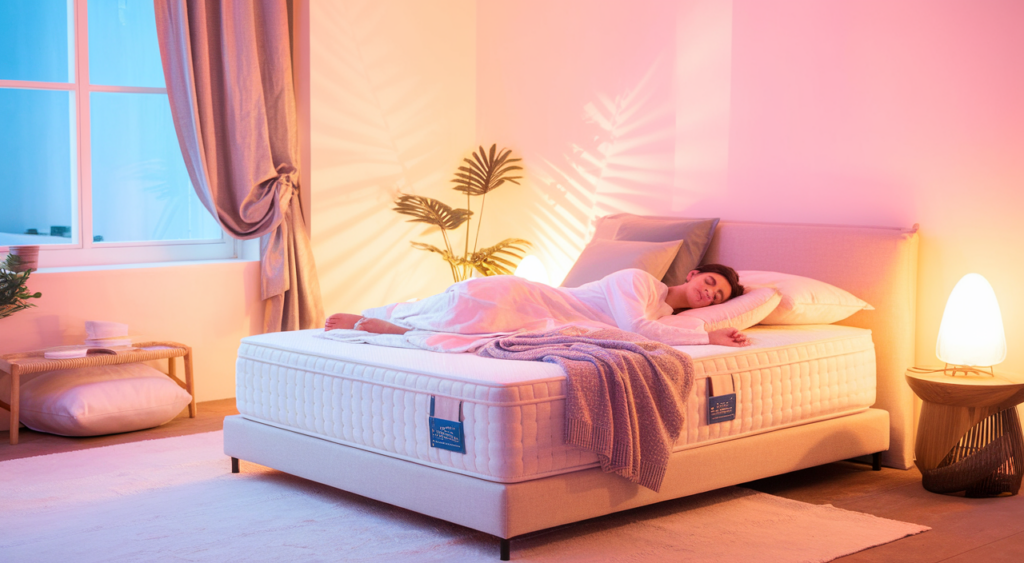
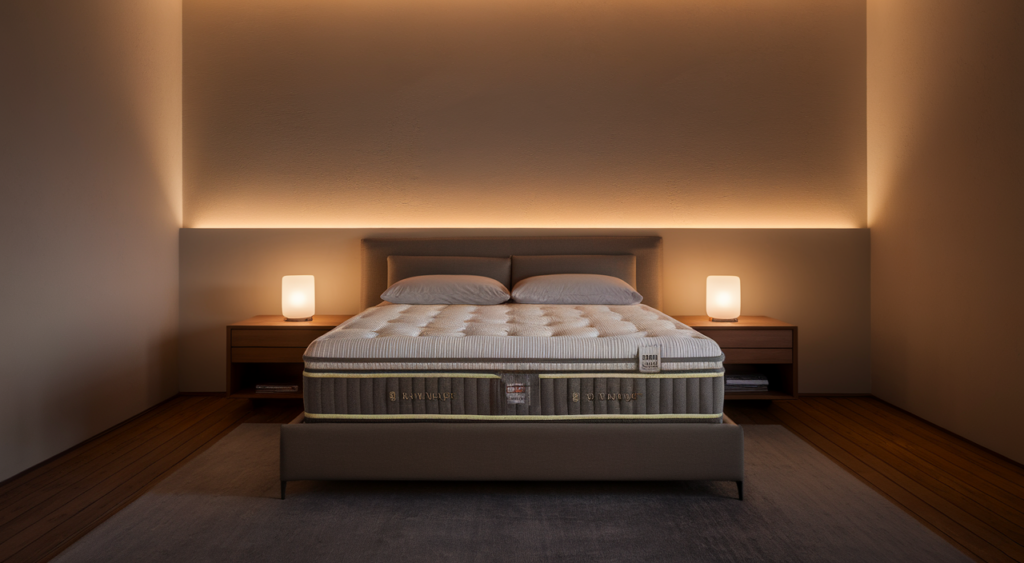
Mattress types explained: The modern mattress market presents many options created to solve specific sleep problems, from memory foam’s pressure relief to smart airbeds’ adjustable support. Knowing the unique features of each mattress type helps you choose based on your comfort needs, sleep position, and health requirements.
Key Takeaways
- Memory foam excels at pressure relief and motion isolation, making it ideal for side sleepers and couples, while modern versions incorporate cooling technologies to address heat retention concerns.
- Latex mattresses, available in natural or synthetic versions, offer superior breathability, hypoallergenic properties, and exceptional durability with a 10-12 year lifespan.
- Hybrid mattresses combine pocketed coils with premium comfort layers to deliver balanced support, enhanced edge stability, and better temperature regulation than all-foam options.
- Traditional innerspring and advanced smart airbeds represent opposite ends of the spectrum, with the former providing affordable bounce and the latter offering customizable firmness settings for personalized comfort.
Memory Foam Mattresses
Memory foam conforms perfectly to body curves, relieving pressure points and reducing partner disturbance. This makes these mattresses perfect for side sleepers who need cushioning for shoulders and hips. The latest models include copper-infused foams, gel beads, and open-cell structures to fight the heat retention that bothered earlier generations of memory foam users.
Latex Mattresses
Latex mattresses give a responsive yet supportive feel with natural bounce. I find the breathable structure of latex particularly valuable for hot sleepers, while its resistance to dust mites and antimicrobial properties benefit allergy sufferers. Though they cost more upfront, their exceptional lifespan makes them a smart long-term investment.
Hybrid Mattresses
Hybrid mattresses strike an excellent balance between support and comfort. The pocketed coil systems create targeted support while foam or latex top layers add plush comfort. These beds typically offer better edge support than all-foam alternatives, letting you use the entire sleep surface while making it easier to get in and out of bed.
Innerspring and Smart Airbeds
Traditional innerspring mattresses remain popular due to their affordability and familiar bouncy feel. Though they lack the pressure relief of newer materials, many sleepers appreciate their cooling airflow and strong support. At the opposite end, smart airbeds allow precise firmness adjustments—sometimes individually for each side of the bed—making them perfect for couples with different preferences.
How to Choose the Right Mattress
When selecting a mattress, consider your primary sleep position, any pain issues, your body type, and temperature preferences. The right mattress combines comfort, support, and durability to match your specific needs.
Memory Foam: The Pressure-Relief Specialist
Originally developed by NASA in the 1960s, memory foam has revolutionized sleep comfort through its unique pressure-relieving properties. This viscoelastic material responds to body heat and weight, creating a personalized surface that distributes pressure evenly across the sleeping area. Understanding different mattress types explained begins with this adaptive material that excels at conforming to individual body shapes.
The defining characteristic of memory foam is its superior ability to relieve pressure points, making it particularly beneficial for side sleepers and those with joint pain. High-density memory foam, typically measuring 5 pounds per cubic foot or higher, provides enhanced durability and better support. These mattresses also excel at motion isolation, making them an excellent choice for couples who might disturb each other’s sleep with movement.
Advanced Temperature Management in Modern Memory Foam
While traditional memory foam gained a reputation for heat retention, modern innovations have largely addressed this concern. Manufacturers now incorporate cooling technologies such as:
- Gel infusion
- Open-cell structures
- Advanced air channels
These improvements, combined with varying foam densities and strategic layering, help create a more balanced sleeping environment that maintains comfort throughout the night.
The average lifespan of a quality memory foam mattress ranges from 7 to 10 years, though this can vary based on foam density and proper mattress selection. For optimal performance, look for models that combine different foam layers—typically a comfort layer of memory foam over denser support foam—to provide both pressure relief and structural support.

Natural and Synthetic Latex: The Durable Alternative
Latex mattresses represent a key category when understanding mattress types explained, offering unique benefits through either natural rubber tree sap or synthetic materials. Natural latex comes directly from rubber trees through careful harvesting, while synthetic latex is produced through chemical processes that aim to replicate the properties of natural latex. Both versions provide distinctive buoyant support that gently contours to your body while maintaining responsiveness.
Talalay vs Dunlop Processing
The manufacturing method significantly influences latex mattress characteristics. Dunlop latex, the traditional process, creates a denser, more supportive feel with excellent durability. Talalay latex undergoes additional steps, producing a lighter, more consistent material with enhanced pressure relief. Many manufacturers combine both types to balance comfort and support. Those seeking certified organic options should look for GOLS (Global Organic Latex Standard) certification, which ensures the highest standards in natural latex production.
Superior breathability stands out as a major advantage of latex mattresses compared to traditional memory foam. The natural open-cell structure allows better airflow, while the material’s inherent resistance to dust mites and mold makes it naturally hypoallergenic. With proper care, latex mattresses maintain their supportive properties for 10-12 years, outlasting many other mattress materials. This longevity, combined with their eco-friendly properties, makes latex an increasingly popular choice for environmentally conscious consumers.

Hybrid Mattresses: The Best of Both Worlds
Hybrid mattresses represent a significant advancement in mattress types explained, combining traditional innerspring support with modern comfort materials. These mattresses feature a foundation of pocketed coils topped with substantial layers of memory foam, latex, or other premium comfort materials at least 2 inches thick. This innovative construction delivers exceptional pressure relief while maintaining reliable support.
The individually wrapped coils in hybrid mattresses minimize motion transfer between sleep partners, a common concern with traditional spring mattresses. Unlike older spring designs, these pocketed coils move independently, responding to your body’s unique pressure points and sleeping position. The coil system also promotes better airflow throughout the mattress, helping regulate temperature more effectively than all-foam options.
One standout feature of hybrid mattresses is their superior edge support, thanks to the reinforced coil perimeter. This enhanced structure allows you to use the entire surface of your mattress without feeling like you might roll off, making choosing the right mattress easier for couples who need maximum usable space. With proper care, hybrid mattresses typically last 8-10 years, offering good value for their investment while maintaining their supportive properties throughout their lifespan.
Key Benefits of Hybrid Construction
- Balanced comfort and support from combined materials
- Enhanced temperature regulation through coil layer
- Reduced motion transfer with pocketed springs
- Strong edge support for full mattress use
- Extended durability compared to traditional innerspring models
Traditional Innerspring: The Classic Choice
Traditional innerspring mattresses remain a popular choice among the various mattress types explained in the market today. These beds feature a core support system of steel coils topped with layers of foam or fiber padding, delivering the familiar bouncy feel many sleepers prefer. The open coil structure promotes excellent airflow throughout the mattress, naturally regulating temperature for comfortable sleep.
One standout feature of innerspring mattresses is their superior edge support, making it easier to sit or sleep near the perimeter without feeling like you might roll off. This characteristic is particularly beneficial for those who share a bed or need the full surface area for sleeping. Quality innerspring models typically feature a coil count of 800 or more in queen size, with higher counts generally indicating better support and durability.
Understanding Innerspring Construction
The construction of innerspring mattresses varies by manufacturer, but most use one of four main coil types:
- Bonnell coils: Hourglass-shaped and interconnected, offering a traditional feel and stable support.
- Offset coils: More conforming than Bonnell coils, with better support and durability due to their hinged design.
- Continuous wire coils: Made from a single piece of wire, offering consistent support and a lower-cost option.
- Pocket coils: Individually wrapped to reduce motion transfer and provide targeted support.
Each coil design offers different benefits for support and motion isolation. While these mattresses usually cost less than newer mattress technologies, their lifespan typically ranges from 6–8 years depending on usage and construction quality. For those interested in comparing different support levels, you can learn more about mattress firmness options to find your ideal match.
Shoppers should note that the comfort layers above the coils significantly impact the overall feel and support of the mattress. Premium models often incorporate high-quality padding materials that enhance comfort while maintaining the responsive feel innerspring mattresses are known for.

Smart Airbeds: The Customization Champion
Smart airbeds represent the cutting-edge intersection of sleep technology and personalized comfort in the modern mattress types explained lineup. These innovative sleep surfaces combine adjustable air chambers with premium foam comfort layers, allowing users to fine-tune their firmness levels with precision. By using a remote control or smartphone app, sleepers can modify the internal air pressure to achieve their ideal support level.
Dual Comfort Zones and Sleep Technology
One of the most compelling features of smart airbeds is their dual-zone capability, making them an excellent choice for couples with different comfort preferences. Each partner can independently adjust their side of the bed without affecting their partner’s sleep surface. Many models also incorporate advanced sleep tracking technology that monitors sleep patterns, breathing rates, and movement, automatically adjusting the mattress throughout the night for optimal support.
The sophisticated construction of these mattresses typically includes multiple air chambers overlaid with high-quality memory foam or latex comfort layers. While this advanced technology commands premium prices, typically ranging from $1,000 to over $5,000, many users find the customization options worth the investment. However, potential buyers should consider that these mattresses require regular maintenance of their pumps and electronic components, and typically have an expected lifespan of 8-10 years with proper care.
If you’re shopping for a new bed and feeling overwhelmed by the choices, this guide that breaks down the different kinds of support can help you decide what works best for your sleep style.
Sources:
Sleep Foundation
Consumer Reports
Mattress Nerd
Avocado Green Mattress Blog